Church Authority in the Bible: Is One Pastor Rule Biblical?
Is one-pastor rule really biblical? Learn how the early church functioned and what Scripture teaches about leadership, elders, and the role of pastors.
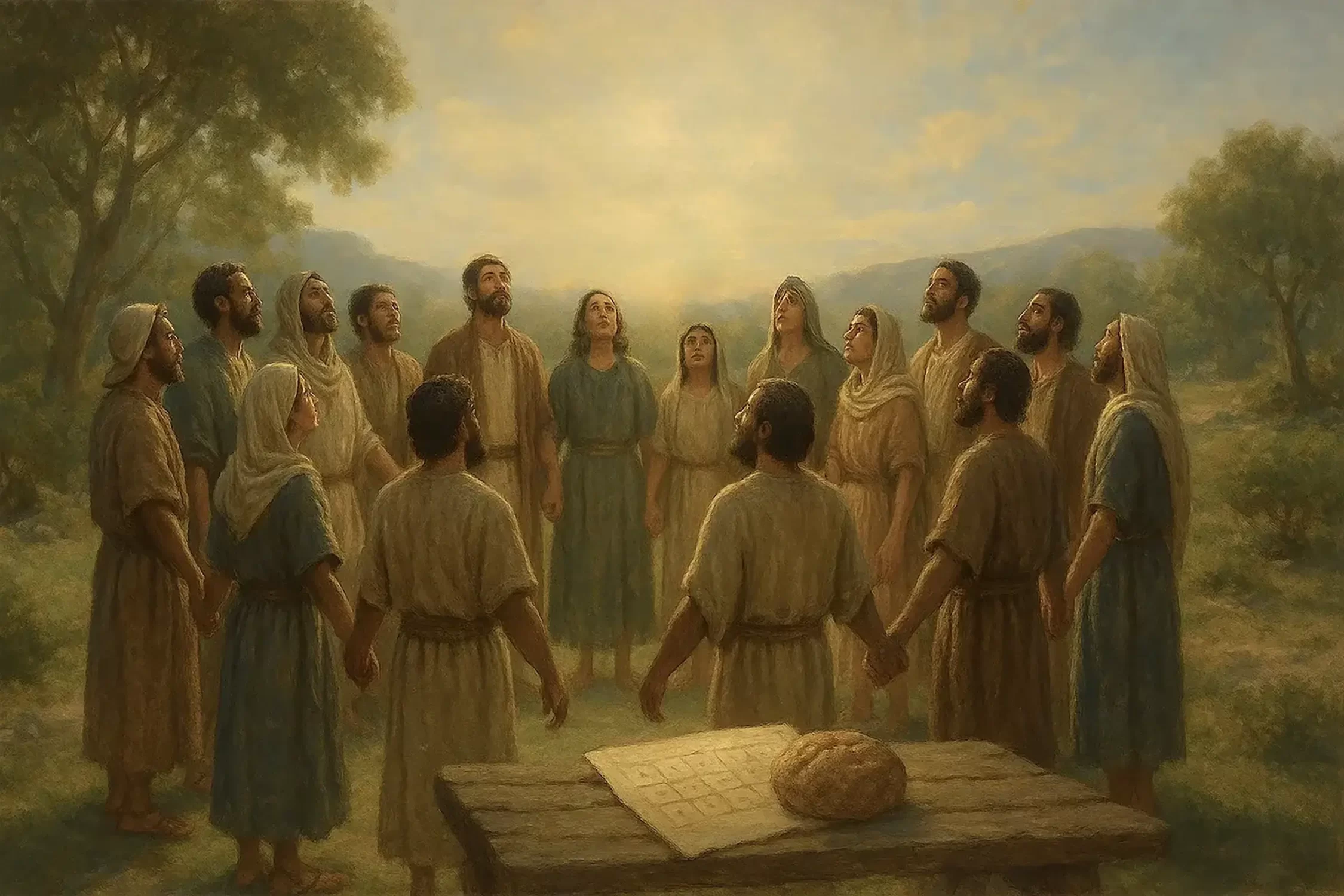
This study explores the question:
“Is the structure of a single pastor as head of each church a biblical teaching?”
It presents clear biblical evidence that, in the first-century—before Rome took control of Christianity—the idea of one man holding sole pastoral authority and doctrinal control in each church was unheard of.
Many might be surprised that anyone would even question the role of a pastor as the head of each church—but let’s take a careful look at what the word of God says on this important subject.
The scripture is clear that each believer is a member of Christ’s spiritual body:
NAS 1 Corinthians 12:27 Now you are Christ’s body, and individually members of it.
What Did Jesus Want for Church Authority in the Bible?
The scripture is also clear on this—that Jesus (the Jewish Messiah) was appointed by God as the head of the body, the church:
NAS Ephesians 1:22 And He put all things in subjection under His feet, and gave Him as head over all things to the church,
NAS Ephesians 4:15 but speaking the truth in love, we are to grow up in all aspects into Him, who is the head, even Christ,
NAS Colossians 1:18 He is also head of the body, the church; and He is the beginning, the first-born from the dead; so that He Himself might come to have first place in everything.
NAS 1 Corinthians 11:3 But I want you to understand that Christ is the head of every man, and the man is the head of a woman, and God is the head of Christ.
What we want to determine is whether the current structure—where each church has a pastor as its head, primary decision-maker, and sole authority over doctrine—is actually prescribed in the Bible.
We will soon see who the apostles appointed to lead the various churches, but first, let’s consider some words from the Jewish Messiah.
“You are all brothers…”
Jesus gave us some important direction on church authority in the Bible, as well as specifically what he didn’t want. In Matthew 23:1, he speaks to his disciples (including the apostles) about the Pharisees, who were the religious leaders of the people at that time:
NAS Matthew 23:6–11 “And they love the place of honor at banquets, and the chief seats in the synagogues,
7 and respectful greetings in the market places, and being called by men, Rabbi.
8 “But do not be called Rabbi; for One is your Teacher, and you are all brothers.
9 “And do not call anyone on earth your father; for One is your Father, He who is in heaven.
10 “And do not be called leaders; for One is your Leader, that is, Christ.
11 “But the greatest among you shall be your servant.
Prior to this declaration, the apostles had argued among themselves on two different occasions as to who among them would be greatest (Luke 9:36; 22:24). Now, Jesus tells them that they are to regard one another as brothers. They were not to seek exalted positions over others or adopt titles such as Father or Rabbi (meaning master or teacher) or Leader.
We also see see from various scriptures written by the apostles that Jesus meant these instructions in a certain sense. For example, Paul said he was called to be a teacher, but he did not have people refer to him as Teacher Paul, Father Paul, or Pastor Paul.
NAS 2 Timothy 1:11 for which I was appointed a preacher and an apostle and a teacher.
What Jesus meant was that none of them were to serve as ultimate teachers over others, because he alone had that position as the true head of the church. Even the apostles, as extensions of Christ and announcers of the word of God, were to consider themselves as brothers—not exalted rulers.
That said, teachers had very important roles within the churches, as we shall see. However, even the word “apostle” was not a term for a high-ranking official. At the time Jesus called the twelve, it simply referred to one who was sent forth as a messenger.
The way many people today refer to “Pastor Smith” or “Pastor Jones” (hypothetical names) runs contrary to what the Lord Jesus taught. This is not meant as a criticism of all the good men of God who serve as pastors today.
Rather, it is meant to point out that the structure that has been handed down from the Roman Catholic Church—where one man called “pastor” holds near-total control over a local church—is not the pattern established by the Lord Jesus or the apostles.
We will examine what the scriptures reveal about this role shortly, but first, let’s consider how the term pastor has evolved over time.
Where Did “Pastor” Come From?
Surprisingly, the singular English word “pastor” is not found in most popular New Testament translations today. It does not appear in the New American Standard (NAS), the King James Version (KJV), the New International Version (NIV), or in many other widely used translations. In spite of an entire church authority structure where a pastor has position as head over almost all churches today, the word itself does not even appear in most New Testament Bibles!
In some translations, the plural form “pastors” appears once—Ephesians 4:11—but it’s important to remember that Jesus and the apostles did not speak English. In that scripture, Paul used the Greek plural word for “shepherds” not the English word “pastors.”
Our English word “pastor” is actually a transliteration of the Latin word pastor, which means shepherd. Latin, of course, was the language of Rome—where this position of pastor as an office first began (as we will explore shortly). Over time, Rome came to be headed by the Pope, who Catholics call the Holy Father and who they believe is the head of the earthly Church. The Roman Catholic Church also appointed pastors as heads of many Catholic parishes. This role in the Catholic Hierarchy is explained below:
Parish priest/pastor
“This section concerns the priest who in the 1983 Code of Canon Law is referred to by the term parochus, which in some English-speaking countries is rendered as “the parish priest”, in others as “the pastor“. The English term “pastor” is also used in a more generic sense corresponding instead to the Latin term pastor …”[1]
The one instance where the word “pastors” appears in some English Bibles is actually a translation of the Greek word for shepherds. In Israel, a shepherd was not an exalted position that men aspired to—it was a humble role, for those who watched over sheep. Paul’s use of this term “shepherds” aligns perfectly with what Jesus taught concerning not adopting lofty titles title that elevate one person over others.
By contrast, a pastor in Rome came to wear regal robes, command reverence, and lead an individual church—ruling over others under the authority and validation of the Pope. According to Etymology online (An online etymological dictionary that traces the history of words), the original meaning of pastor as one who cares for the flock is now considered obsolete:
pastor(n.)
late 14c. (mid-13c. as a surname), “shepherd, one who has care of a flock or herd” (a sense now obsolete), also figurative, “spiritual guide, shepherd of souls, a Christian minister or clergyman,” from Old French pastor, pastur “herdsman, shepherd” (12c.) and directly from Latin pastor “shepherd,”[2]
Some might argue that “pastor” means “shepherd,” and that is true. However, as the etymology discussed illustrates, the word meanings often evolve over time. In ancient Israel, being a shepherd was considered a lowly and humble role. Today, however, the word pastor in many churches evokes the image of someone who holds significant authority over other believers, particularly in matters of doctrine.
In a home fellowship setting: when someone says, “The pastor has just arrived,” a sense of reverence often fills the room—as if someone elevated has entered, someone more than just a “brother,” in Christ. This is contrary to what Jesus intended. In many churches, simply holding doctrinal views that differ from the pastor’s can even be seen as risky.
Protestants often object to Catholics referring to their clergy as “Father,” believing it contradicts what Jesus taught. But is calling a man “Father Flannigan” really so different than calling him “Pastor Flannigan”? In the Catholic Church today, the parish priest is often referred to as either Father or Pastor.
Here’s another example of how word meanings can shift: If a man had four children and raised them to always call him “Pope” instead of “Father,” most people would find that highly unusual. And if he explained, “Oh, Pope just means Father,” that might be technically true—but doesn’t the word carry a very different connotation today? Likewise, when people refer to Pastor Smith or Pastor Jones, they often don’t picture a fellow brother in Christ, but rather an elevated figure—something the Lord never intended.
Speaking of pastor (or shepherd), Jesus said that he was the good shepherd, yet he was never called “Pastor Jesus.”
NAS John 10:14 “I am the good shepherd; and I know My own, and My own know Me …”
In fact, the title pastor was never applied to Jesus, any of the apostles, or to any man in the New Testament. The term shepherd was used metaphorically—picturing care, guidance, and protection—but it was not a church position. The same metaphor applies to the term sheep: we do not refer to ourselves as “Sheep Jimmy” or “Sheep Larry,” because this is not our title or position in the church—it’s only a symbolic picture of our relationship with Christ. The same is true of shepherd (or pastor): it was never used as an official title or church position by the apostles.
Consider Ephesians 4:11—the one New Testament scripture where the word “pastors” appears (in many Bibles). The Greek word Paul used here was actually “shepherds,” as shown in a more literal translation:
NAS Ephesians 4:11 And He gave some as apostles, and some as prophets, and some as evangelists, and some as pastors and teachers,
YLT Ephesians 4:11 and He gave some as apostles, and some as prophets, and some as proclaimers of good news, and some as shepherds and teachers,
Again, shepherds were not church positions—any more than sheep were. As R. C. H. Lenski points out, the Greek grammar used in Ephesians 4:11 shows that “shepherds and teachers”[3] refers to a single group (i.e. the same functional role). The teachers “shepherd” the flock by providing spiritual nourishment—that is, teaching from the Lord.
So, the one instance where the Greek word for “shepherds” is translated into English as “pastors,” does not provide a solid foundation for establishing a formal church office titled pastor. This verse does not create or authorize a position in which one man holds full authority over doctrine or rules over a local church as its sole leader or spiritual “Father.”
Jesus told Peter (an apostle) to “shepherd” his sheep, yet Peter was never referred to as “Shepherd Peter” or “Pastor Peter,” because this was never intended to be a formal title or church office.
NAS John 21:16 He said to him again a second time, “Simon, son of John, do you love Me?” He said to Him, “Yes, Lord; You know that I love You.” He said to him, “Shepherd My sheep.”
If Not a Pastor, Then Who Was to Lead?
Who then did God and the apostles appoint to lead the early churches?
When Paul told the Corinthians who God appointed in the church, the position of pastor is not even mentioned—though teachers are:
NAS 1 Corinthians 12:28 And God has appointed in the church, first apostles, second prophets, third teachers, then miracles, then gifts of healings, helps, administrations, various kinds of tongues.
Since pastors did not exist in any of the churches founded by the apostles, it makes perfect sense that Paul does not mention them here. Nor did he overlook shepherds, because shepherd was also not an official church position. Further exploration of the scriptures makes this clearer.
So, who then did the apostles appoint to lead each church as it was being formed and established? Consider who the apostles Paul and Barnabas (Acts 14:14) appointed:
NAS Acts 14:23 And when they had appointed elders for them in every church, having prayed with fasting, they commended them to the Lord in whom they had believed.
The term “elders” was a familiar one among the Jews, dating back to the time of Moses, when God told him to gather seventy men “from the elders of Israel” to help support him (Numbers 11:16). This structure continued into New Testament times, where we see elders in Israel with whom Jesus often interacted.
The apostles continued to use the word elders, appointing certain men in each church to this role. However, it was never used as a title—such as “Elder Peter.” Instead, it was a general term for those in leadership who demonstrated godly character and possessed a deeper understanding of the Scriptures.
While an individual—such as an apostle (1 Peter 5:1; 2 John 1:1) or someone in another role (James 5:14; Acts 20:17)—could be designated as an elder, it was the elders—plural—who were appointed to lead each local church, not a single pastor with elders under him. This is evident from the passage above regarding Paul and Barnabas.
Why Are “Pastors” Always Absent from the Apostles’ Meetings?
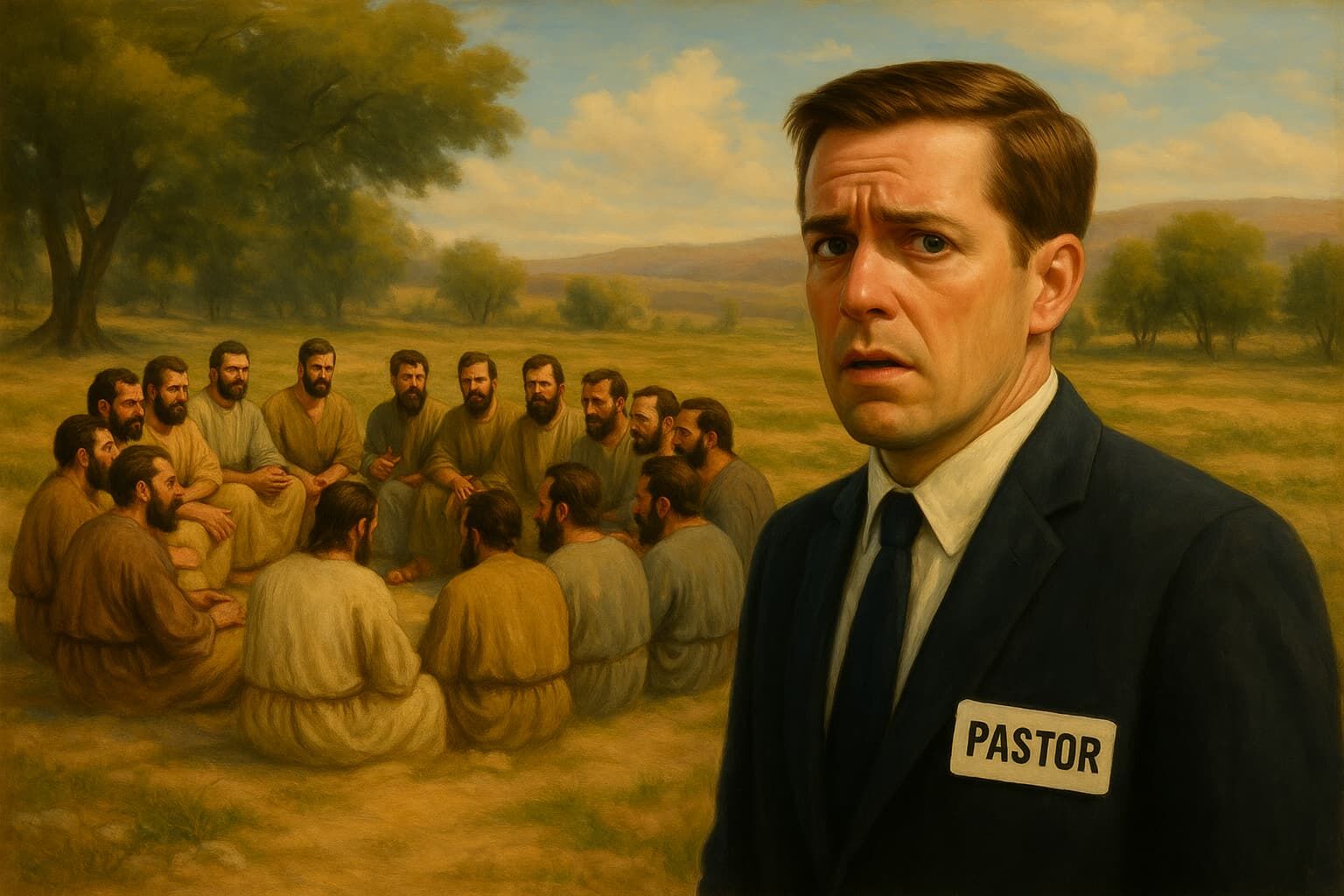
After elders were appointed in every church (Acts 14:23), a controversy arose in a certain region, prompting a major meeting. Interestingly, no pastors were invited—only the elders. This wasn’t because the apostles were being rude, dismissive, or bypassing church leadership. Rather, it was because there were no pastors to invite; God and the apostles never appointed such a position:
NAS Acts 15:1–2 And some men came down from Judea and began teaching the brethren, “Unless you are circumcised according to the custom of Moses, you cannot be saved.”
2 And when Paul and Barnabas had great dissension and debate with them, the brethren determined that Paul and Barnabas and certain others of them should go up to Jerusalem to the apostles and elders concerning this issue.
Continuing with scriptures showing the same, Paul and Barnabas are then welcomed into the church in Jerusalem by the apostles and elders, yet no pastor is there to welcome them:
NAS Acts 15:3-6 Therefore, being sent on their way by the church, they were passing through both Phoenicia and Samaria, describing in detail the conversion of the Gentiles, and were bringing great joy to all the brethren.
4 And when they arrived at Jerusalem, they were received by the church and the apostles and the elders, and they reported all that God had done with them.
5 But certain ones of the sect of the Pharisees who had believed, stood up, saying, “It is necessary to circumcise them, and to direct them to observe the Law of Moses.”
6 And the apostles and the elders came together to look into this matter.
When the apostles and elders gathered, they didn’t mention Pastor Smith, Father Flannigan, or Rabbi Goldstein—because they had followed Jesus’ instruction not to use such titles. And when the controversy in the book of Acts was resolved and a letter was sent out, once again no pastors were mentioned—because they didn’t exist:
NAS Acts 15:23 and they sent this letter by them, “The apostles and the brethren who are elders, to the brethren in Antioch and Syria and Cilicia who are from the Gentiles, greetings.
Would Paul Be Disrespectful by Shunning the Pastors?
When Paul the apostle reached out to the believers in Ephesus, he called for the elders of the church to come and meet with him. But why is there no mention of a pastor? In modern Protestant terms, Paul should have summoned “the pastor and the elders.” Yet, since no pastors held a distinct position in church authority, how could Paul call for someone who didn’t exist?
NAS Acts 20:17–18 And from Miletus he sent to Ephesus and called to him the elders of the church.
18 And when they had come to him, he said to them, “You yourselves know, from the first day that I set foot in Asia, how I was with you the whole time,
A few verses later, he tells these same elders (who the Holy Spirit has made overseers) to “shepherd” the church:
NAS Acts 20:28–29 “Be on guard for yourselves and for all the flock, among which the Holy Spirit has made you overseers, to shepherd the church of God which He purchased with His own blood.
29 “I know that after my departure savage wolves will come in among you, not sparing the flock;
In our day, if one tells the elders to “shepherd” (i.e., “pastor”) the church it would cause total confusion, for we have been taught that pastors shepherd churches, not elders. According to our current teaching, the elders are expected to only support the one man who rules (i.e., the pastor), and to remain submissive to him.
The structure that has been handed down over the years is not what Jesus or the apostles taught. Although Paul tells these elders to “shepherd” the church, he does not intend that “shepherd” (or pastor) is now a new position or title.
He also uses the words “flock” and “wolves” in the verse above, but we know these are also not church positions—only symbolic terms, used in the same way as “shepherd.”
The great problem with the current non-biblical church authority structure is that one man can dictate doctrine and refuse to feed the flock any new truth that Christ, the head of the church, may reveal. Jesus said the Holy Spirit would lead into all truth.
Yet we have come out of more than 1,500 years of Roman Catholic rule and doctrine—and we are still not fully removed from it today. Having one man over each church, who may have his own motives, can greatly stifle new truth that the Lord wants to bring in.
Here are two more examples in the scriptures that refer to the elders but never mention the pastor who supposedly rules over them:
NAS Titus 1:5 For this reason I left you in Crete, that you might set in order what remains, and appoint elders in every city as I directed you,
NAS James 5:14 Is anyone among you sick? Let him call for the elders of the church, and let them pray over him, anointing him with oil in the name of the Lord;
And here is another verse in which Paul mentions the “prophets and teachers” in the church in Antioch but completely omits any mention of a pastor or rabbi:
NAS Acts 13:1 Now there were at Antioch, in the church that was there, prophets and teachers: Barnabas, and Simeon who was called Niger, and Lucius of Cyrene, and Manaen who had been brought up with Herod the tetrarch, and Saul.
Why does Paul keep leaving out the pastor? Does he have a problem with the pastors ruling over the various churches as teacher and head? In his letter to the early Roman church (see Romans chapter 16), Paul goes on for sixteen verses commending various church leaders and ministers there. Yet, not once does he mention a pastor or church father.
Once again, Paul was not being disrespectful in these omissions—it’s simply because no such position existed.
Was the Apostle Peter Less Than a Pastor?
Peter, an apostle, refers to himself as an elder (not a pastor), which shows how different the position of elder in Peter’s day was from the structure handed down to us by Rome. And as we saw with Paul above, Peter also tells the elders to shepherd the flock:
NAS 1 Peter 5:1-3 Therefore, I exhort the elders among you, as yourfellow elder and witness of the sufferings of Christ, and a partaker also of the glory that is to be revealed,
2 shepherd the flock of God among you, exercising oversight not under compulsion, but voluntarily, according to the will of God; and not for sordid gain, but with eagerness;
3 nor yet as lording it over those allotted to your charge, but proving to be examples to the flock.
4 And when the Chief Shepherd appears, you will receive the unfading crown of glory.
Here again, according to our current Protestant vernacular, Peter, like Paul, would seem to be undermining each church’s pastor by writing to the elders (plural) and telling them to shepherd (i.e. pastor) the flock. After all, in the church authority structure handed down to us, elders are to submit to the pastor. But in Peter’s day, no pastors existed. It was the elders (which included apostles, prophets, teachers and other leaders) who headed each church, not a single pastor.
Some may believe that it’s better when just one person makes the decisions. And they could say that it makes sense to avoid situations such as where four elders are deadlocked over a particular issue. But scripture reminds us that our thoughts are not God’s thoughts, and His ways are higher than ours. Therefore, our preferences should never override God’s word.
We see an excellent example in Acts 15, where various men of God—apostles and elders—come together on a contentious issue. While various men give input and express points, the Holy Spirit is allowed to lead. Their goal is to discern God’s heart on the matter—not to let one man rule over the others to make the final decision (Acts 15:2–6, 22, 28).
Perhaps the reason the Lord established the church authority structure He did—and why the apostles followed His instructions—was to prevent what we see in some churches today, where one man becomes elevated as the pastor. Was it meant to guard against a single individual determining all doctrine?
Could it be to ensure that believers remain free to seek the truth of Scripture for themselves, using both God’s Word and their God-given minds? To avoid a scenario where they are simply told to “be submissive” and to yield to the verse that says to obey those who “rule over you” (Hebrews 13:17), rather than exercising their spiritual discernment?
KJV Hebrews 13:17 Obey them that have the rule over you, and submit yourselves: for they watch for your souls, as they that must give account, that they may do it with joy, and not with grief: for that is unprofitable for you.
The King James translation is not the most accurate in this verse. The Greek word they translated as “rule,” simply means “lead” (i.e., those who lead). And the Greek word translated as “obey” actually means to be persuadable, as shown in Strong’s Concordance:
3982 πείθω peitho {pi’-tho}
Meaning: 1) persuade
That verse means to be persuadable to those having the lead among you. It does not instruct us to bypass our God-given responsibility to discern truth through the Scriptures. It does not tell us to submit unquestioningly to whatever we are told to believe. God gives each person the freedom—and the responsibility—to determine what is scripturally true. At the same time, He calls us to be teachable and open when new truth aligns with His Word.
John the apostle also leaves out the supposed pastors. In the Book of Revelation, he pictures various elders sitting on thrones in heaven but not a single pastor:
NAS Revelation 4:4 And around the throne were twenty-four thrones; and upon the thrones I saw twenty-four elders sitting, clothed in white garments, and golden crowns on their heads.
NAS Revelation 5:5 and one of the elders said to me, “Stop weeping; behold, the Lion that is from the tribe of Judah, the Root of David, has overcome so as to open the book and its seven seals.”
NAS Revelation 7:13 And one of the elders answered, saying to me, “These who are clothed in the white robes, who are they, and from where have they come?”
NAS Revelation 11:16 And the twenty-four elders, who sit on their thrones before God, fell on their faces and worshiped God,
John, of course, did not intend to slight anyone by not mentioning a single pastor. As with Peter and Paul, these omissions were because this position just didn’t exist.
Paul, Did Not “Rule Over” the People
In Acts 17, when some people searched the Scriptures to see if what Paul was teaching aligned with the Word of God, Paul did not rebuke them. He didn’t react with insecurity, shouting, “How dare you question the authority of an apostle!” Instead, he spoke well of them—commending their discernment—and declared that they were “more noble-minded” than others because they examined the Scriptures to confirm the truth of his message:
NAS Acts 17:11 Now these were more noble-minded than those in Thessalonica, for they received the word with great eagerness, examining the Scriptures daily, to see whether these things were so.
This, of course, does not mean that there is no proper church authority. Scripture clearly shows that God delegates authority. But God is the highest authority, and we are ultimately accountable to Him and His Word. God set Christ as the head of the church—not each pastor.
Peter and the apostles proved that God was the ultimate authority when they spoke to the high priest and the Sanhedrin, declaring they would not stop teaching about the Savior:
NAS Acts 5:29 But Peter and the apostles answered and said, “We must obey God rather than men …”
Ultimately, Christ and God’s Spirit Must Lead
The shift from pastor led churches to Holy Spirit led assemblies may not be an easy transition. However, God is calling His people to become a perfected, Spirit led body of Christ, having proper biblical authority, so this shift will take place.
NAS Romans 8:14 For all who are being led by the Spirit of God, these are sons of God.
.
.
NOTE: For those who may want to read further, looking into what was considered proper authority among the Jewish people both during and prior to the time of Christ, the book The Messianic Feast has an appendix titled Proper Authority that can be read for free.
Footnotes
.
.
[1] https://en.wikipedia.org/wiki/Hierarchy_of_the_Catholic_Church
[2] https://www.etymonline.com/word/pastor
[3] See Lenski, The Interpretation of Ephesians p. 528.
Share it:

Blog Categories

The Messianic Feast
The Messianic Feast reveals hidden truths by uncovering first-century Jewish context behind misunderstood scriptures and the origins of Communion.
Babette Bechtold says:
Amen! So very true. God has been speaking the same truth to me for years in so many different ways. This teaching confirms them all. You cannot put the new wine (what God want to do) into the old wine skin (church system). It cannot contain it. So many of God’s children do not follow the guidance of the Holy Spirit because their Pastor is not supportive. May we all come into the fullness of Christ the head of the church and be obedient to him alone so that we can serve the nations and do the greater works the scriptures talk about. Thanks for sharing.
Jon Tourje says:
We can see, then, that the model which is currently so prevalent, i.e. big church with celebrity pastor preaching every week, after 30 minutes of music, is not biblical. Small home gatherings should be the norm. All in anticipation of the coming of Yeshua , which will Bring the millennial Kingdom to fruition. And no, Christians, you will not be raptured prior to the millennial kingdom.
Wilbur Wasson says:
I enjoyed this article and it’s truth. Though I maintain going to church I have seen the full on control pastor with no other pastor other than the youth pastor. This ended up running my mentor and myself out. We now attend a church with multiple pastors and elders. The pastors heart here is more like that of a brother and this church is also very mission oriented following more the biblical model. Also having many home groups and a praying church where prayer is openly practiced between members. The word prospers here and many of the elders and pastors actually came out of revival from an other church. God’s growth plan.
Randall Williams says:
This is very well thought out and written. I have always believed this.
Paul Arnold says:
It seems to me that whenever 2 or 3 or more are gathered in His name He will be in the midst of them. Big , little, large or small ,,,with or without worship leaders, with or without leadership God seems to find a way to move. Indeed salvation miracle He still reserves to Himself, Pentecost is still His and His alone. He saves, He heals, it’s His prayer language,, He delivers, He restores. So does He need man..No ..and then again yes. It remains that it is God in Christian reconciling mankind. And it is God in you reconciling…mature father’s and mothers in the faith mentoring Faith, living examples, living “types” of Christ on earth, speaking life to dying world.. Abused judgemental authority has never done this. The apostle to the gentiles says ..Let all things be done decently and in order, preferring one another in love ..not rule over one another.. It becomes apparent we are still working our own salvation. There are very few Moses, fewer yet Abraham’s, Apostle Paul’s calling is centered in teaching so there is room for redeeming leadership.. so where are the “God men” of today.?
Mark White says:
In 1 Corinthians 14:26-28 (Order Of Worship) Paul is most likely well aware from the Get-Go that there always seemed to be at least one person that feels “called” (and maybe so) to be the spokesperson elder in a house church fellowship when he writes, “When you assemble, each one has a psalm, has a teaching, has a revelation, has a tongue, has an interpretation. Let all things be done for edification” (NAS). Today’s “pastors” misinterpret verse 26 (IMO) as Paul implying that there was such confusion with everyone talking at once, thus justifying the need for an ordained pastor. It’s just another example of how scripture can be misinterpreted to justify a doctrinal position.
Supposedly once off the Isle of Patmos the Apostle John attended the church at Ephesus. People noticed this old man seated at the back of the church and found out he was John. They asked him to come forward and speak to the gathering. Without any lengthy sermon he said to them, “Love one another” and sat down again.
ATennent says:
Good points Mark, and yes, getting the “love one another” part is the most important thing to get right!